March, 2011 leaked porn honeybutt93 Canon released its newest evolution in its EOS line with the T3i. As an Atlanta Real Estate Photographer, I have always been a big fan of the EOS line. Not only do they deliver just about every feature a real estate photographer really needs, but they are affordable as well. What surprised me about this new model is how fast it followed on the heels of the popular T2i which was released barely a year ago. At the time it was being touted as the new king of cheap HD DSLR video even though the camera itself is a direct predecessor of what has traditionally been Canon’s entry level still photography cameras. So its not surprising that many of the new features appear, at first glance anyway, to cater to those that intend to use the camera to shoot video. Upon closer inspection, I’m finding that these new features, in addition to all the improvements made since the T1i, are making this model more and more attractive for those that photograph real estate and/or have the desire to move into video.
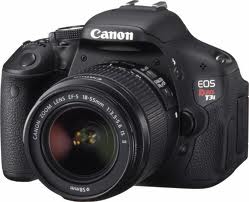
Before I get into the new features added in the T3i model, I want to mention some of the others that made the T1i and T2i so popular. Here is a quick rundown of what you need to know as someone looking to shoot home interiors and other listing Photo booth hire Birmingham.
- 18 Megapixels – Way more than you will ever need for real estate work.
- ISO Range 100 – 6400 (expandable up to 12800) – Better performance at higher ISO means better low light and handheld capabilities. Although most of real estate photography is done on a tripod, this will come in handy when you want to shoot detail shots handheld or doing night and twilight shots.
- CMOS image sensor – This sensor is rumored to be the same sensor used in the 7D, Canon’s mid level pro-sumer model. Even if it is not identical, most of the test are showing that it is capable of coming very close to the Image Quality of a camera costing almost twice the price.
- Auto Exposure Bracketing (AEB) – This feature allows you to take three exposures of a scene that you can then later blend together in post or simply select the the best exposure from the bracket. I’m still waiting for Canon to up the brackets to at least five exposures. I gave up on thinking they would get closer to Nikons ability to bracket nine exposures at a time a long time ago… Either way, three exposures is enough to get your feet wet with HDR and exposure blending.
- Live View – Those that have made the leap from Point and Shoot models to a DSLR a few years ago may have found yourself longing for the convenience of being able to see the scene on the LCD screen on the back of the camera as you are taking the picture. Having used a XTi for the last 5 years, I honestly have gotten use to using a viewfinder (again). Many others, on the other hand, prefer seeing the scene as it looks before the picture is taken.
Basically your bases are covered for a still photography body. Where things really get interesting is the fact that it shots HD Video at 1920 x 1080 (otherwise known as 1080p) at 24, 25 or 30p. In other words, the camera is capable of producing that “cinema” look. Of course resolution and frame rate are one thing. Where I feel that this camera, and video capable DSLR camera’s in general, are game changing is that fact that you can utilize all of the good lenses used for still photography. In order to match this feature set in a bona fide video camera, you would have to spend thousands… Being able to bring this level of creative videography to the masses is going to change the way the average person shoots and thinks about video. For those that are truly inspired you could just about produce a short film about a listing, or a professional looking video bio, or a community tour… The possibilities are endless, just take a look at this promo video.
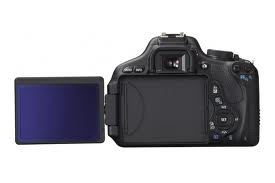
Of the new features to the T3i, one of the ones I find most interesting is the articulating LCD screen. This flip out, rotating screen is the same screen on the 60D and will undoubtedly make shooting video a little more intuitive, especially when using the camera at odd angles or perspectives. I also see a use for this new screen in photographing real estate, specifically interiors. Having shoot literally thousands of images of homes for sale in Atlanta, GA there have been several occasions where my best shot was one in which I could not physically be behind the camera. In most of these situations I either guessed at my composition or made a compromise and quickly found myself in an some awkward position trying to look through the viewfinder with the camera shoved into a corner. It may not sound like much on the surface, but being able to move the camera back an extra foot or two, or being able to shoot at a few mm longer on a lens can make a noticeable difference when you are working with ultra wide angle lenses.
But wait, there is more! Along with the T3i Canon also announced two new speedlites, the 270EX II and 320EX. While the lights have some impressive stats, what makes the package complete is that the T3i can control the flashes wirelessly. Instead of spending extra money on triggers and receivers, everything can be done through the camera. If that wasn’t enough, the 320EX also has a LED continuous light function that makes these strobes a possible solution to off camera lighting for the purpose of video. A T3i with three or four 320EXs could easily double as a still photography and video rig. Of course there is always the question of battery drain and no doubt you would have to have a bag of rechargeable batteries on hand, but according to Canon these lights can last up to four hours on a fresh set. I’ll believe it when I see it… If in fact the T3i proves capable of triggering up to four lights for stills and then having them double as supplemental light for video, that is worth something right there.
Everything considered, I’m impressed. The T3i is loaded with features that a real estate photographer can appreciate. The ability to do both still photography and video in one package frees up the photographer to branch out into the world of video while simultaneously covering all the basic needs of still photography. Now there is also the option of triggering multiple strobes from the camera and in conjunction with the new 320EX speedlights, supplemental lighting for video is also possible. All of this, and more, and still costing less than $900 with the kit lens. Now I’m not the early adopter type, so I will wait until that price drops another couple hundred dollars and Canon has a chance to do the obligatory firmware update. For those of you that are ready to take the plunge now, I can’t think of a better camera to get you started in photography and video for real estate.
The real estate business is important and highly valued to make a lot of profit. But yes, it is not easy to do and it takes a lot of effort. Anyway, it is a job, and as a job it does not guarantee that your family has financial support if something happens to you. So it is better to get life insurance, see www.lifecoverquotes.org.uk for more information.
Learn more about Atlanta Real Estate Photography services here.


Marietta, GA Real Estate Listing Agent
and Professional Photographer
Georgia Elite Realty
Direct 770-363-3350
email iranwatson@gmail.com
Real Estate website: Iranwatson.listingware.com
Atlanta Real Estate Photographer website: IranWatsonPhoto.com
Photography Portfolio (Flash required): BestHomePhotography.com


